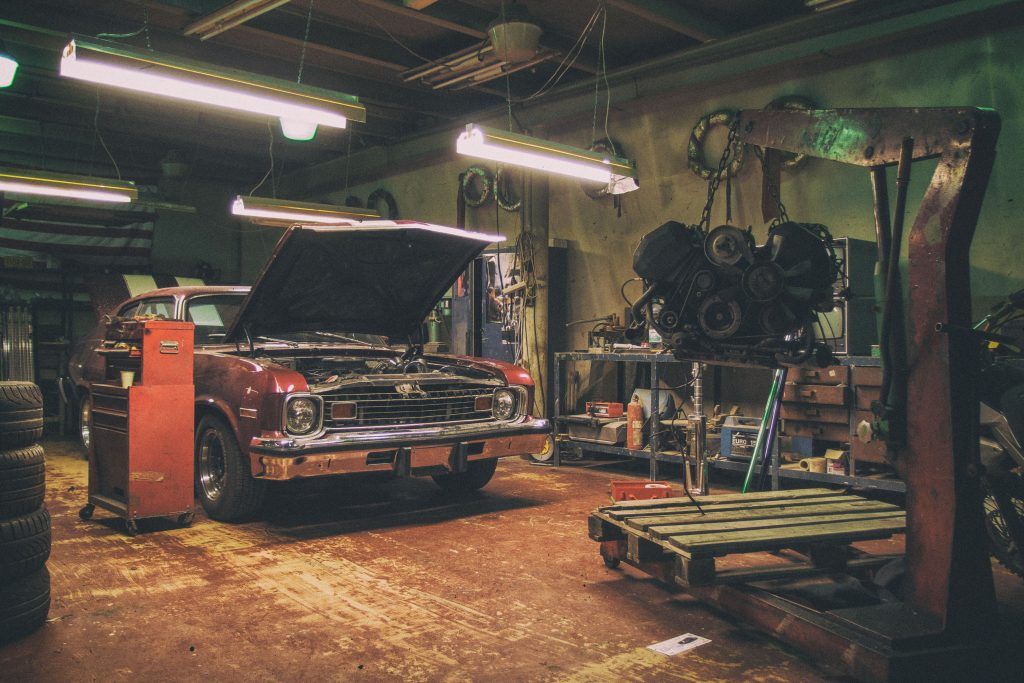
Aura Automotive
Luxury car care, designed to feel like it.
Screens Designed
Full-fidelity, every state covered
Components Built
Reusable design system
Usability Score
Tested with 8 real clients
Master-level craftsmanship hidden behind a phone number and a Facebook page.
Aura Automotive wasn't a garage — it was a studio. Ceramic coatings applied in climate-controlled bays. Paint protection film cut with sub-millimetre precision. Mechanical repairs documented with before-and-after photography. Concierge pickup and delivery for clients who didn't have time to wait. The work was genuinely world-class.
But the only way to book was a phone call. The only way to check on your car was to call again. The only proof of the work was a folder of photos on the owner's phone that never made it online. Aura was running a luxury operation with the digital infrastructure of a neighbourhood tyre shop.
The owner knew something was wrong. Clients who spent €3,000 on a full detail expected a digital experience that matched. Instead they got a voicemail, a handwritten receipt, and radio silence until pickup day. The high-end car community in Brussels talks — and 'the work is amazing but the experience is stuck in 2005' was becoming the reputation.
"My clients drive cars that cost more than my house. They expect every interaction — digital or physical — to feel like it belongs in that world."
Three disciplines, one connected system.
We didn't hand over a logo and wish them luck. We rebuilt the entire digital identity as one integrated system — brand, product, and code working as a single organism.
A visual language worthy of the craftsmanship
Before touching any screens, we defined Aura's brand position: not a mechanic, not a detailer — a luxury automotive care studio. We built a restrained visual system around deep blacks, warm metallics, and clean typography that mirrors the precision of the work itself. The brand identity feels like opening the door of a well-engineered car — dark, warm, considered. Every touchpoint from the app icon to the invoice header carries the same quiet authority. We delivered a complete brand guideline system so every future designer or printer maintains the standard.
Designing the service experience from booking to handover
We mapped the entire client journey — from first discovering Aura to picking up the finished car — and designed a digital product for every moment that mattered. A booking system where clients select their car model and service tier, see transparent pricing, and choose a time slot or request concierge pickup. A real-time service tracker showing which stage their car is in (intake, preparation, coating, curing, quality check, ready). A client portal where they receive before-and-after photography, maintenance schedules, and warranty documentation. Every screen was prototyped in Figma at full fidelity, tested with 8 existing Aura clients, and refined based on their feedback before handoff.
The design system and developer handoff
We packaged everything into a production-ready design system: a complete component library with 38 components across light and dark modes, design tokens for colour, typography, spacing and elevation, responsive specifications for every breakpoint, interaction specifications with easing curves and duration values, and annotated developer handoff documentation. The system was built so any competent React developer could implement it faithfully without needing a designer in the room for every decision. We also delivered a motion specification document covering every transition, loading state, and micro-interaction in the product.
The numbers told the story within 90 days.
62 screens across the booking flow, service tracker, client portal, and admin dashboard — each one designed at full fidelity with every state accounted for: empty states, loading states, error states, edge cases. Not wireframes. Not mockups. Production-ready designs that a developer can build from directly.
A complete component library covering buttons, inputs, cards, modals, navigation, status indicators, service cards, vehicle selectors, and more — each with variants for light mode, dark mode, hover, focus, disabled, and loading states. Built in Figma with auto-layout and proper constraints so they scale correctly.
We tested the interactive prototype with 8 existing Aura clients — the people who would actually use the platform daily. Average usability score was 4.7 out of 5. The booking flow took an average of 47 seconds to complete. Zero users needed help finding the service tracker. The before-and-after gallery was the single most praised feature.
Every screen annotated with exact spacing, typography, and colour values. Every interaction documented with easing curves and durations. Every component has a specification sheet. The developer who builds this — whether Imaginta or someone else — has everything they need to implement it faithfully.
I came to Imaginta expecting a website. They gave me something I didn't know I needed — a complete digital experience that makes my clients feel the same thing they feel when they see their car after a full detail. That moment of 'this is exactly right.' The booking app, the tracker, the portal — it all feels like Aura now. Not like software. Like us.
Aura Automotive
Brussels, Belgium
Recognise this problem in your business?
Let's talk about building something similar.
Start Your Project